
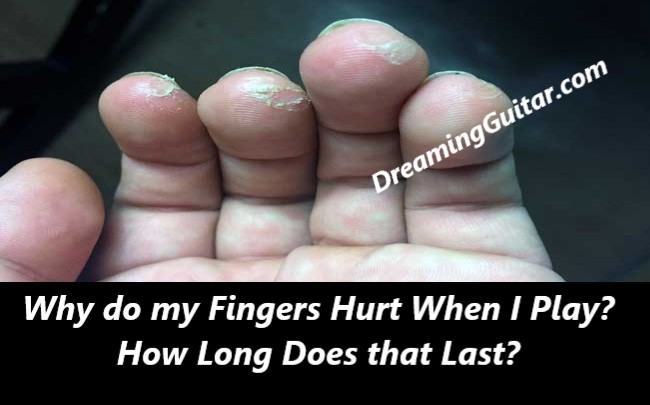
Why do my Fingers Hurt When I Play? How Long Does that Last?
Welcome to Guitar!
Playing guitar is incredibly rewarding and exciting but when your new you may ask why do my fingers hurt when I play? How long does that last? Well the truth is we all have this to varying extents but its pretty short lived if your strumming away every day.

The pain comes from the string pushing into your fingertips. Firstly if its right on your finger tips and you can see the string indent congratulations your doing it correctly. If your seeing the string indent on the flats if your fingers then they need to be more vertical when pushing down on the strings.
How Can I Limit the Finger Pain.
One of the main ways to limit the pain is to just ensure your guitar has lighter gauge strings fitted. A set of .009’s will reduce the battle quite quickly. You can go lighter to .008s if really suffering.
Please remember the discomfort leaves you quickly as you discover more chords and songs you can play. The worst thing is having the wrong size or gauge strings. For most the .009s are great.
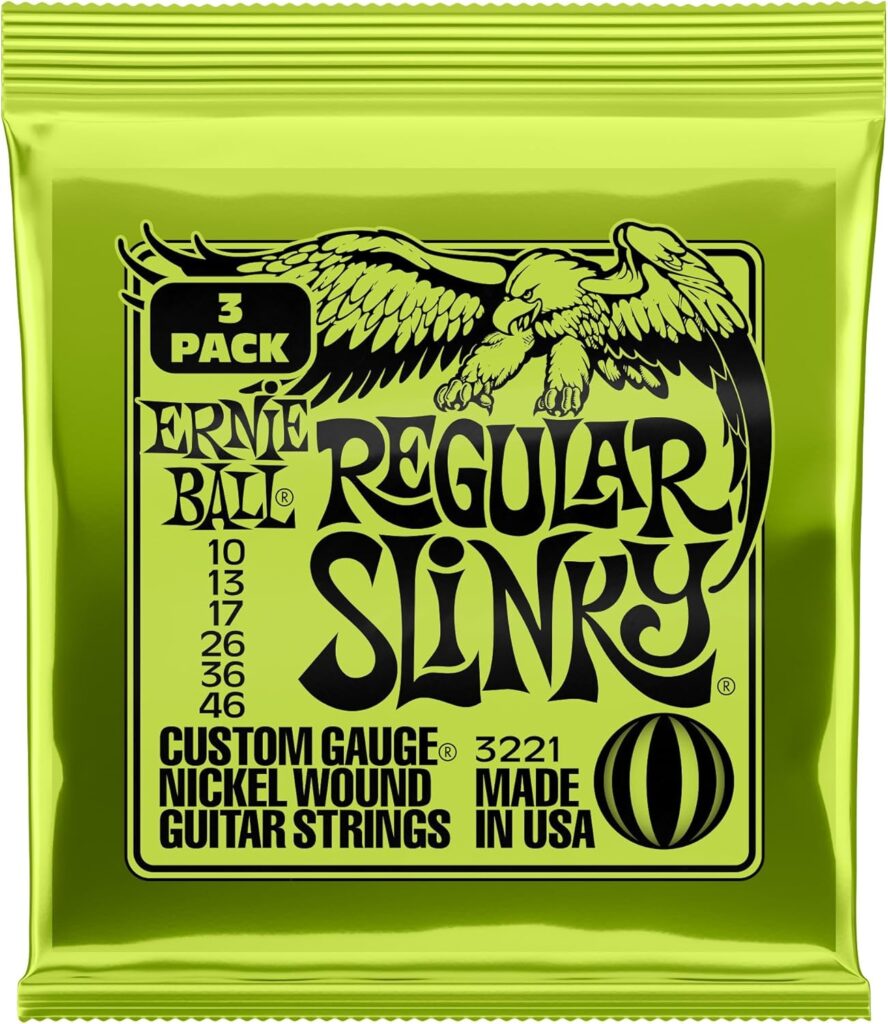
Lets also note what guitar we are using because both acoustic and electric guitars have a range of string sizes to choose from. Acoustic guitars are often a little thicker but don’t have to be.
Super important: If you have a classical guitar, that is one with gut or plastic strings, please do not add steal strings to these guitars. These guitars do not have a truss rod (Metal rod in the neck) and in time the bridge which is glued on will pull off the top of the guitar and the neck will bend as well most likely. It will destroy the guitar.
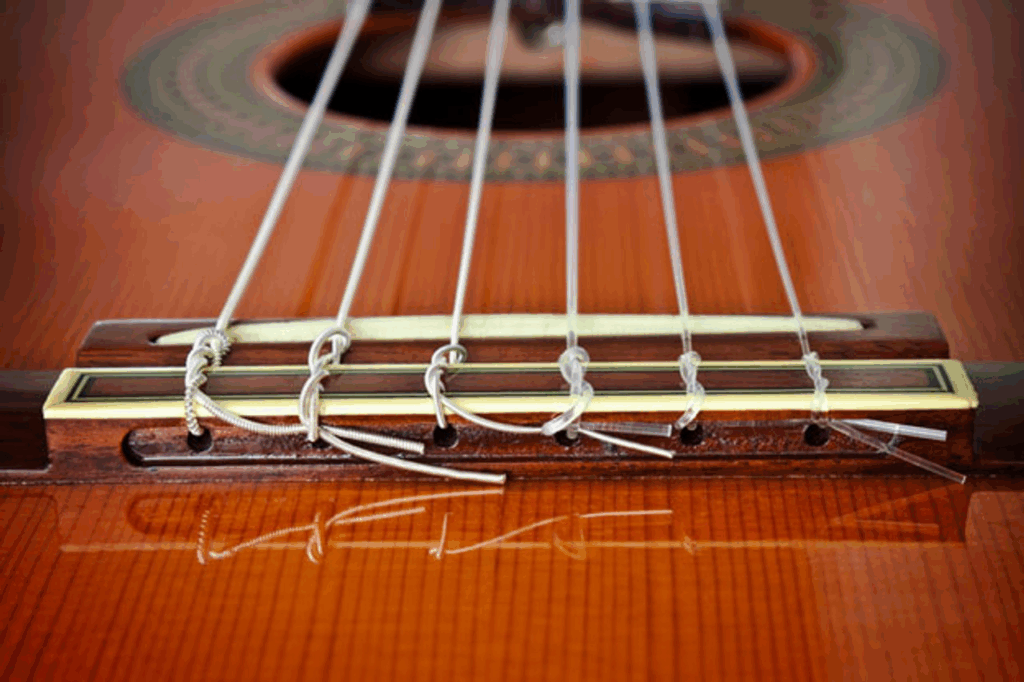
Also the string to neck height starts ok but becomes terribly high and hard to play. Many a player has had family buy a cheap guitar only to find this happen.
These indents become imprinted to a point. If I haven’t played for a while the lines in the tips of my finger become evident as if my body is saying hey you haven’t played for a while!
What’s Causing the Pain?
When you start pressing steel or nylon strings against the fretboard, your fingertips experience friction and pressure they’ve never felt before. This causes temporary tenderness and sometimes a burning or stinging sensation.
Over time, your skin toughens and develops calluses the protective pads that make guitar playing pain-free.
How Long Does Finger Pain Last?
- Days 1–3: Mild soreness and tenderness after short practice sessions.
- Days 4–10: Skin begins to toughen up; light calluses form.
- After 2–3 weeks: Pain fades significantly as calluses harden.
If you’re practicing daily even just 15–30 minutes your fingers should feel noticeably better after about two weeks. It honestly does not take long and the little pain makes you a better player because your conscious where your fretting the string. Its on the tips of your fingers and not on the flats of your fingers.

When Pain Is Not Normal
Some discomfort is expected, but sharp, joint, or tendon pain means you may be pressing too hard or using poor technique. You don’t need to push down incredibly hard. No just enough to make the string and note sound clean and distinctly.
Stop immediately if you feel pain in your wrist, thumb base, or forearm. These can indicate strain or early signs of injury. Relax your forearm and elbow and allow them to simply hang.
Check your posture and technique:
- Keep your wrist straight, not bent sharply.
- Use your fingertips (not the pads) to fret strings.
- Relax your grip don’t squeeze the neck too tightly.
- Make sure your guitar’s action (string height) isn’t too high.
Tips for Reducing Finger Pain
- Play shorter sessions more often.
Frequent, shorter practices help build endurance safely. - Use lighter gauge strings.
Lighter strings are easier on beginner fingers. - Warm up.
Gentle finger stretches before playing improve flexibility. - Keep fingers dry.
Moisture softens calluses — avoid playing with wet hands. - File or sand rough calluses.
This prevents peeling and cracking.
Bottom Line
Yes, your fingers will hurt at first but that’s part of learning the guitar. The discomfort is temporary and fades as your calluses form.
Play regularly, use good technique, and listen to your body. Before long, you’ll play pain-free and with confidence.
The Author.
Brendon McAliece is a multi lingual expatriate Australian living in Thailand who speaks Thai, a number of its dialects and Lao. He has been playing guitar since he was 12 and continues to do so to this day.
He has performing in bands across the Middle East while contracting as a Aircraft Weapons Instructor with his 10 years of RAAF Armament Fitter experience and his maintained his love for playing guitar it continues to thrive today.