Master the Beginner’s Guide to Reading Guitar Tabs.
Learn How to Read Tabs and Chords — The Essential Language of the Guitar.
Introduction: Why Learn Tabs and Chord Charts?
If you’ve ever searched for your favourite song online, you’ve probably seen guitar tabs and chord charts. They’re everywhere and for good reason. Tabs (short for tablature) and chord diagrams are the most common ways guitarists share music without needing to read traditional notation.
Beginners can find TAB a fast easy way to read and understand new songs that they want to learn. Learning how to read TAB & Chord Charts opens up a whole new world of songs, riffs, and solos. Best of all, it’s simple once you understand the basics.
We are here to make that easy!
Part 1: Understanding Guitar Tabs
What Is a Guitar Tab?
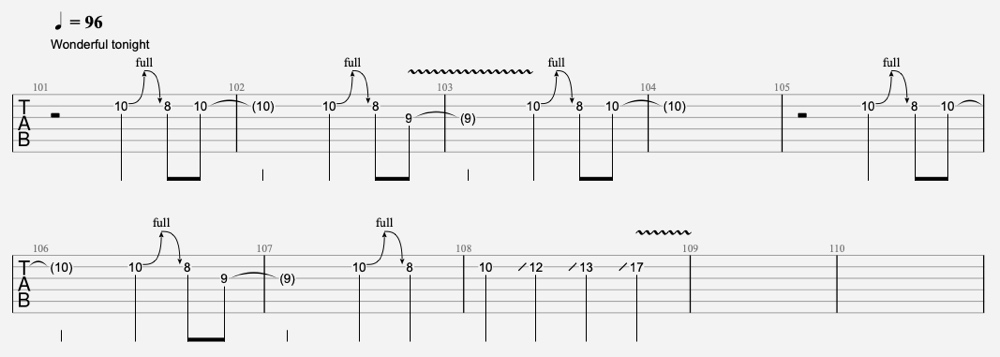
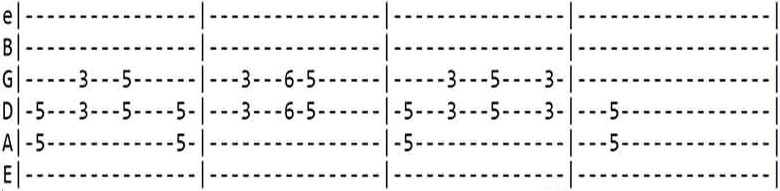
A guitar tab is a visual representation of your guitar’s strings and frets as well as instructions on what to do to a note. Think of it as a map of your fretboard, showing you where to place your fingers. It tells you in simple terms what note to play, where to play it and what if anything to do with the note to make it sound like the song your learning.
Adding expression to a note is also easy when reading tablature with the range of options from a simple slide to a bend up to a new note and even trills where you rapidly play one note hammer on and pull off from the next repeatedly. Its really quite helpful.
I Expect you Already Know the Techniques.
In this blog I’m taking for granted you already know how to bend, slide etc on a fretboard and are wanting a path to learn more interesting and maybe complicated parts like riffs and solos to add to your knowledge.
The TAB.
The example below is a simple version just showing the basic layout. The lower E note is representing the thick or low E string and the e is representing the high or thin E string. You may look at this as how you pear over your guitar neck with the thickest string closest to you.
Here’s what a blank tab looks like:
e|----------------|
B|----------------|
G|----------------|
D|----------------|
A|----------------|
E|----------------|
- The six lines represent your six guitar strings.
- The bottom line (E) is your lowest (thickest) string.
- The top line (e) is your highest (thinnest) string.

How to Read Frets.
Reading the frets is also very simple. In the example below we see what is an Em chord written. This tells us to put our two fingers on the second fret of the A & D strings.
Numbers on the lines show which fret to play:
e|----------------|
B|----------------|
G|----------------|
D|-----2----------|
A|-----2----------|
E|-----0----------|
This means:
- Play the open 6th string (E string)
- Press the 2nd fret on the 5th string (A string)
- Press the 2nd fret on the 4th string (D string)
That’s an E minor chord in tab form.
Common Tab Symbols and Notations
Tablature notation is really simple and easy to understand for beginners. The range of techniques is tells us to do to achieve the solo or riff we desire to play!
Tabs can include symbols to show techniques. Here are the most common:
| Symbol | Meaning | Example |
|---|---|---|
| h | Hammer-on | 5h7 = play 5, hammer to 7 |
| p | Pull-off | 7p5 = play 7, pull to 5 |
| / | Slide up | 5/7 = slide from 5 to 7 |
| \ | Slide down | 7\5 = slide from 7 to 5 |
| b | Bend | 7b9 = bend note at 7th fret to sound like 9 |
| ~ | Vibrato | 7~ = add a gentle wobble |
| x | Muted note | x = percussive “chuck” sound |
| ( ) | Ghost note | (3) = play very softly |
💡 Tip: Start slow. Tabs show what to play, but not when to play it. Listening to the original song helps you match the rhythm.
Notation & TAB. What’s the Major Difference?
The biggest difference between TAB and traditional notation is TAB can guide you a basic guide in the speed and feel to a limited amount. It’s not as precise as traditional notation but when players write notation many make the effort to show the notes and time. In most cases the TAB is a guide and you get your timing and feel from the music your listening to!
Notation is precise with timing, pauses, pitch and much more so if you wish to be a pro and work as an active session musician then Notation may be worth the effort.
Part 2: Reading Chord Charts
What Is a Chord Chart?
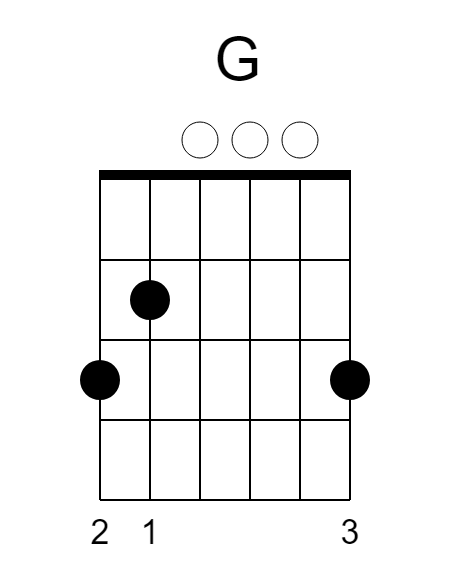
A chord chart shows which strings and frets to hold down a snapshot of the neck seen vertically. It again tells you what strings and what frets to use and because its all in a vertical line this means they should be played together. This chord could be separated horizontally to play an arpeggio or just have the chord sound out slowly as a riff.
Here’s an example of a G major chord:
  G Major
e|---3---|
B|---0---|
G|---0---|
D|---0---|
A|---2---|
E|---3---|
- Numbers = fret to press
- 0 = open string (play it)
- X = don’t play this string
How to Read a Chord Diagram Visually
A chord diagram often looks like this:
    G
e|--3--|
B|--0--|
G|--0--|
D|--0--|
A|--2--|
E|--3--|
- The vertical lines are strings (low E on left, high e on right).
- The horizontal lines are frets.
- Dots show where to place your fingers.
- Numbers (1, 2, 3, 4) at the bottom may show which finger to use.
The Most Common Beginner Chords
Start with these open chords they form the backbone of countless songs:
- C Major
- G Major
- D Major
- A Major
- E Major
- A Minor
- E Minor
You may notice some X’s in the diagram. Not all chords use all six strings on a guitar so if you see an X then don’t play this string.
Practice transitioning between them slowly accuracy before speed.
Part 3: Tabs vs. Chords — When to Use Each.
| Use | Tabs | Chords |
|---|---|---|
| Riffs & melodies | ✅ | ❌ |
| Full-song rhythm | ❌ | ✅ |
| Solos or intros | ✅ | ❌ |
| Acoustic strumming | ❌ | ✅ |
| Fingerstyle or lead lines | ✅ | ❌ |
In short:
- Tabs = exact note-for-note playing
- Chords = overall harmonic structure
Often, you’ll find both in the same song — chords for rhythm, tabs for fills or solos.
Part 4: Practice Tips for Reading Tabs and Chords
- Start Simple — Pick easy songs like Smoke on the Water or Wish You Were Here.
- Listen First — Match the rhythm by ear. Tabs show positions, not timing.
- Use a Metronome — Helps build timing and consistency.
- Build Muscle Memory — Repeat chord changes slowly and clearly.
- Combine Tabs & Chords — Strum chords, then learn riffs in between.
Part 5: Tools and Resources
- Ultimate Guitar and Songsterr — Free tab/chord libraries
- YouTube Tutorials — Watch hand positioning and timing
- Metronome Apps — Keep time while learning new songs
- GuitarTab / Chordify — Great for automatic chord recognition
Conclusion: Your First Language as a Guitarist.
Learning to read tabs and chord charts is your first step to real musical independence. You’ll soon be able to learn songs, jam with others, and start writing your own music all without needing to read classical notation.
So grab your guitar, pick a favourite tune, and start decoding those lines and numbers. Within weeks, you’ll be reading tabs and chords like a natural.
The Author.
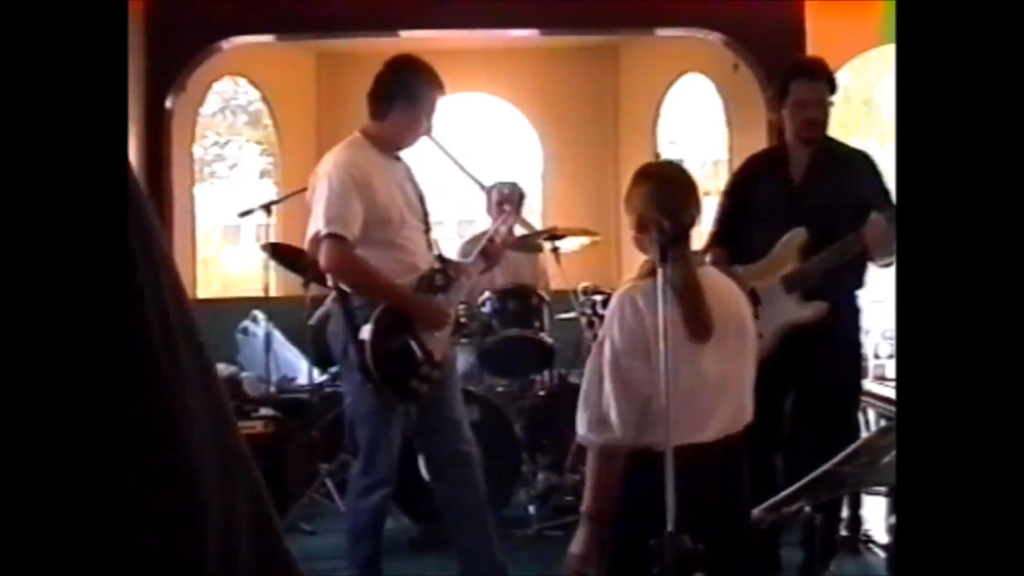
Brendon McAliece is a multi lingual expatriate Australian living in Thailand who speaks Thai, a number of its dialects and Lao. He has been playing guitar since he was 12 and continues to do so to this day.
He has performing in bands across the Middle East while contracting as a Aircraft Weapons Instructor with his 10 years of RAAF Armament Fitter experience and his maintained his love for playing guitar it continues to thrive today.
Also Visit:
DreamingGuitar.com – DreamingCoffee.com – LetsFlyVFR.com
As an Amazon affiliate I may earn on qualifying sales.
Leave a Reply