
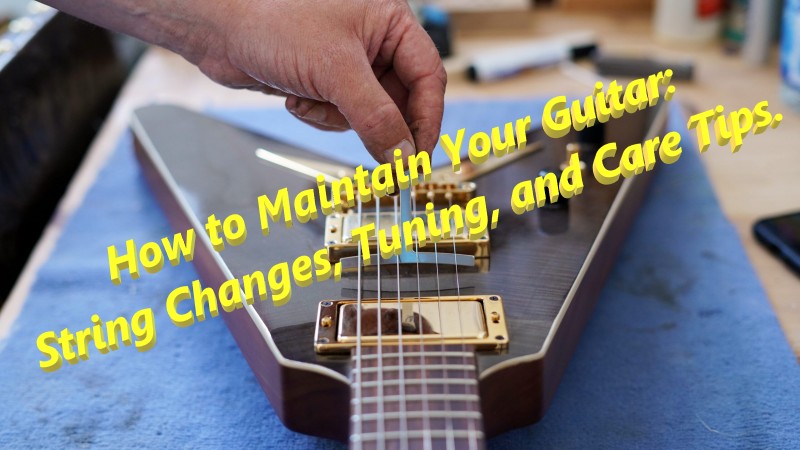
How to Maintain Your Guitar: String Changes, Tuning, and Care Tips.
Practical maintenance topics are searched by all levels
How to maintain your guitar & keeping your guitar in top shape ensures the best sound and performance. Whether you’re a beginner or a seasoned player, regular maintenance from changing strings to tuning and cleaning makes your instrument last longer and sound its best.

When playing your guitar and especially on stage live you get pretty hot and sweaty often and this all ends up on your guitar strings. To maintain your best sound you have to balance the cost against the sound when considering replacing strings.
If your intending to be a really powerful full time musician then you’ll be broke for some time as history tells us so replacing strings after each gig probably is impractical advice. Remember to use a dry cloth and wipe the strings and your trusty guitar down after a gig or even if you’ve just been playing at home.
1. Changing Your Guitar Strings
How to maintain your guitar is as important as just changing old strings as they can make even the best guitar sound dull. Replace them every few weeks (or sooner if you play daily).
Steps:
- Loosen the old strings carefully.
- Clean the fretboard before adding new strings.
- Wind the new strings evenly and stretch them gently.
Replacing strings is a simple and monotonous task for sure but its how to maintain your guitar in its best shape. It’s essential for great sound when your rocking out for friends or a full stadium. Its rare you know in the early days but a new set of strings of your choice just return the guitar and its sound to where you thought it was. Its a truly worthwhile task as part of knowing how to maintain your guitar for the best performance.
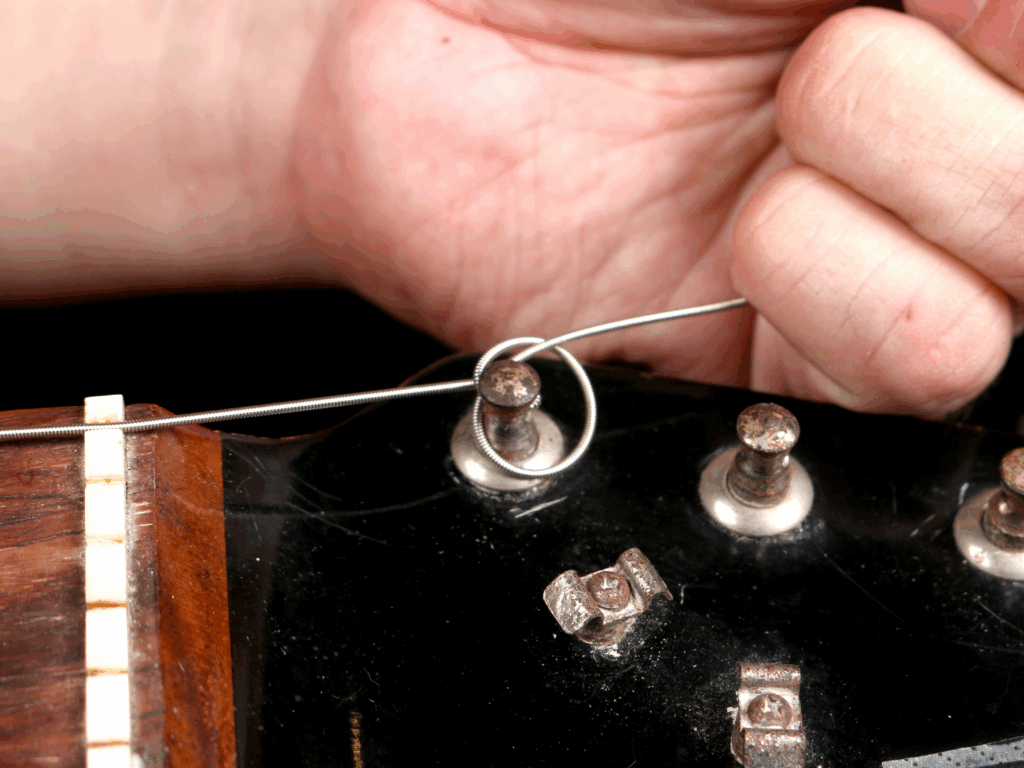
Ensuring the string gets locked when installing it to the tuner is a major issue. If you have locking tuners that’s easy, just turn the lock down tight. If you using standard tuners then ensure when you feed the string through the next time it goes around the string locks over the original section you installed through the hole. This will help stop it slip and lose tune.
Once all your strings are installed tighten them up reasonably then make sure you pull each string up and then retighten the tuner. This exercise will take up any slack and make sure it doesn’t go out of tune the first time you bend a note! Do it to all the strings till they maintain their note!
2. Mastering Guitar Tuning
Proper tuning enhances tone and playability.
Tips:
- Use a digital tuner or tuning app.
- Tune from the lowest (E) to the highest (e) string.
- Retune after playing for a while to stabilize new strings.
The tuner can be a headstock tuner, a separate box on the floor that also mutes your guitar while tuning. People really hate listening to musicians tune guitar on stage. The tuner can be apart of your mixed effects unit if your using one of these.

The simplest form is a tuning fork or a set of pitch pipes. If you’ve been around for a while as I have then you will have used them all. They all are as good as each other but some more convenient.
3. Guitar Cleaning and Care
A clean guitar not only looks good but also performs better.
Maintenance tips:
- Wipe strings and body after every session.
- Avoid moisture and extreme temperatures.
- Use lemon oil for the fretboard occasionally.
Your guitar no matter if its inexpensive or super expensive it demands you appreciate and look after it. Wiping the guitar body as well as neck is a great idea to keep it clean and smooth to play.

The application of a cleaner is not without its benefits and having some lemon oil around to add to your fretboard where appropriate is without doubt a great idea. If your playing a maple fretboard you may not need to do so as it may be lacquered.
4. Storing Your Guitar Safely
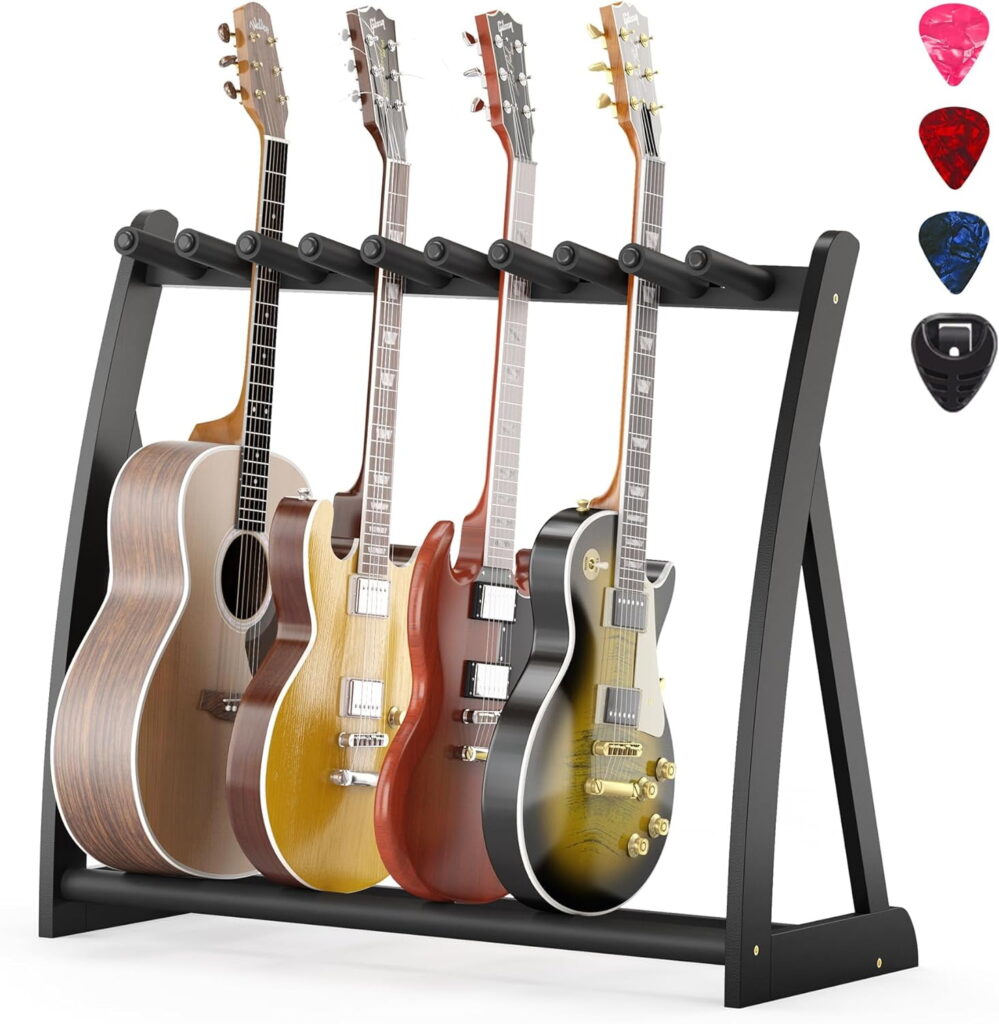
Keep your guitar in a case or on a stand in a dry, shaded area. Use a humidity control pack if needed. This just goes without saying! You cannot go buy a new one each week because it fell and broke its neck on your mates amp!
Important note is to ensure you do take your guitar out of its case some time before playing and have it on the stage area. It needs to acclimatise to the heat and humidity for a while at which you should retune it.
Wood reacts with template and humidity. Tune it up in you airconditioned room or in a cool place then play it out in the sun its going to lose tune no matter how good a guitar it is! Be warned my guitar friends.
I have fallen fowl of this in my early playing. No one wants to hear you play out of tune!
5. Regular Check-ups
Every few months, check for fret wear, loose tuners, and neck alignment. If unsure, take it to a professional technician. This is very much a case by case situation. If your playing intermittently then its less important to do it more often.
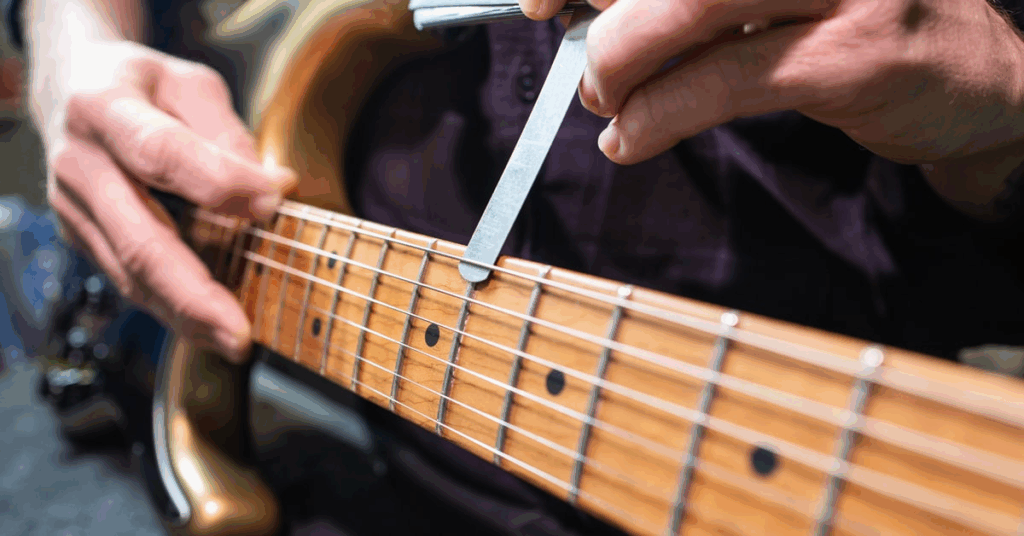
That should make basic sense eh! If you hard at it playing all the time then things do get worn and may need adjusting or you may wish to fine tune your guitars setup.
Playing guitar is very personal and a guitar set up by one person who loves it may feel uncomfortable and not as good to play until you get it the way you want it.
What Does a Guitar Setup Do?
Its a mystery to new players but a great guitar setup checks quite a number of things to make your guitar feel great to play as well sound great too.

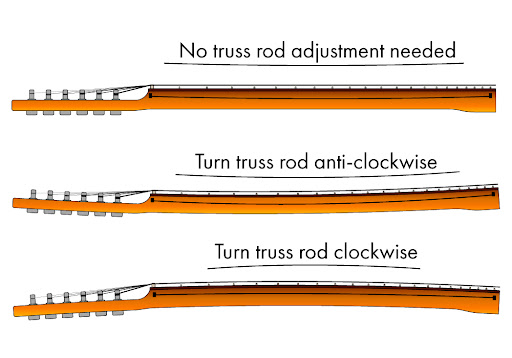
The basic setup is how to maintain your guitar by first checking your guitars neck relief.
- Neck relief is a very slight bow away from the strings which prevents buzzing. Its only in the thousandths of an inch so barely perceivable but its there in a good setup. There is a metal adjustable rod in the neck of most guitars called a Truss Rod. By moving this one way or the other effects the bend of the neck of the guitar.
- String height is checked at the nut to ensure the strings are the correct height above the fret at the top of the guitar. The next check is the height of the strings at the 12th fret. This can be adjusted by moving either the bridge up or down as well as the neck relief we spoke of previously.
Each manufacturer has their basic specs but you can set lower or higher string height to taste. - Intonation is important so the guitar remains in tune from the nut to the end of the fretboard. This is adjusted by moving the saddles on the bridge back and forward with a screw driver normally.
This is fiddly and time consuming if its not set correctly initially. Notes can be ok at the net but be quite a bit sharp or flat at the 12th fret. This is super important in the overall sound of your guitar. - Pickup Height is what it sound like and adjusting the pickup itself or the little poles normally see out of pickups can change the tone of the string as well as how long it sustains. The pickup magnet needs to be at the right distance so the magnetic field is effected by the string moving within it.
This gives us our tone & volume! It also effects the sustain if the pickup is to close. The magnet pulls the string and stops it vibrating so the note ends prematurely. Getting the distance just right is also super important. Manufacturers of guitars and pickups have their own guidelines as a quality starting point.
The Author.

Brendon McAliece is a multi lingual expatriate Australian living in Thailand who speaks Thai, a number of its dialects and Lao. He has been playing guitar since he was 12 and continues to do so to this day.
He has performing in bands across the Middle East while contracting as a Aircraft Weapons Instructor with his 10 years of RAAF Armament Fitter experience and his maintained his love for playing guitar it continues to thrive today.