How EQ Is Important to Band Members for Guitarists.
Intro: Why EQ matters to every band member
Every instrument sits in a frequency range. When two instruments occupy the same frequency space loudly, they mask one another meaning listeners hear less clarity and instruments fight for attention. For guitarists, that often means the amp either disappears when the bass or piano hits or it clashes with vocals. EQ is the tool that carves out pockets in the spectrum so each instrument has a place that is audible, characterful, and complementary.
Joe Bonamassa’s 31‑band trick – listen to understand
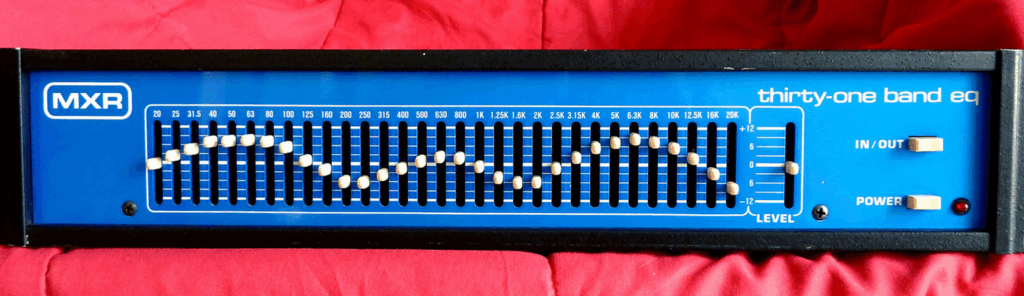
Joe Bonamassa suggests using a graphic 31‑band EQ (1/3‑octave steps across the audio band) and toggling each band while playing a recording of your favourite band. When you turn a particular band off and something obvious in the music disappears, you’ve discovered an instrument (or a prominent part of an instrument) that lives in that area.
Why it’s useful:
- It trains your ear to where instruments live. 31 bands are granular enough to separate kick fundamental from the kick’s low‑mid thump, or a guitar body from its pick attack.
- It reveals masking relationships — which instrument occupies the same band as another.
- It gives you empirical evidence when making EQ decisions on stage.
How to do it practically:
- Load a recording of a mix you like (studio track or a pro live mix).
- Insert a 31‑band graphic EQ (or a plugin with sweepable narrow Qs) on the master playback channel.
- Solo a band (or just toggle one band off and on) and note which instrument drops out or changes.
- Label the bands mentally (e.g., “2.5kHz — vocal presence”, “110Hz — bass body”).
- Repeat across several songs to average what instruments occupy each band.
- When speaking to sound tech you can speak in the same language as to where a problem could be in the mix.
Quick reference: Where Instruments Typically Live.
Below is a practical cheat‑sheet for common instruments (useful for guitarists):
- Kick drum: 40–100 Hz (fundamental), 100–250 Hz (thump), 2–4 kHz (attack/click)
- Bass guitar: 40–250 Hz (fundamentals/weight), 700–1.2 kHz (definition), 2–4 kHz (string noise/pick attack)
- Electric guitar (full): 80–250 Hz (body), 250–600 Hz (woofy/muddy), 700 Hz–2 kHz (clarity/rock rhythm), 2–5 kHz (pick attack/presence), 5–8 kHz+ (air/sheen)
- Acoustic guitar: 80–300 Hz (body), 1–3 kHz (pluck/attack), 6–10 kHz (air)
- Vocals (male): 100–250 Hz (body), 1–4 kHz (presence), 4–8 kHz (sibilance/air)
- Vocals (female): 160–400 Hz (body), 2–5 kHz (presence), 5–10 kHz (air)
- Snare: 120–250 Hz (body), 1.5–4 kHz (snap), 6–12 kHz (sizzle)
- Piano: 27 Hz–4 kHz fundamental range; hihats/upper harmonics up to 12–14 kHz
These ranges overlap. Overlap is normal – EQ is about shaping relative energy, not making instruments live in isolated single‑octave deserts.
Instruments & Where they Sit in the Frequency Mix
Below is a simple SVG diagram that shows frequency from 20 Hz to 20 kHz with coloured blocks that indicate typical areas of prominence for each instrument.
Practical Steps for Guitarists to find their Place in the Mix.

- Listen first – either Joe’s 31‑band method or simply A/B with and without your amp in the band mix (if possible). Determine where the guitar’s most important character lives for the song (body around 120–300 Hz? presence 1–2 kHz? bite around 3–5 kHz?).
- Pick one or two frequency targets to feature – don’t boost everything. Example: for a rhythm guitar, choose 200 Hz (body) and 2.5 kHz (presence). For a lead, favour 1.5–4 kHz for cut and add some 5–8 kHz for air if needed.
- Cut to create space – Identify where the vocalist or bass is strong and gently cut those frequencies on your amp. Small cuts (‑1.5 to ‑4 dB) can free huge space.
- Use high‑pass filtering – roll off unnecessary low end on guitar amps (often below 80–120 Hz). This prevents low‑end mud and leaves room for bass and kick.
- Tame the high end when clashing – if guitars and vocals compete in the 3–5 kHz area, slightly reduce the guitar there and nudge the vocal presence up (or vice versa).
- Consider stereo placement & tone differences – using two guitars with slightly different amp voicings (one darker, one brighter) or panning helps them avoid masking each other.
- If you have a graphic EQ on stage (or in-amp EQ), use the 31‑band trick: notch out bands where you hear the vocalist and boost the band(s) where the guitar needs to sit but keep boosts modest and cuts surgical.
- Communicate with the band – ask the vocalist or FOH engineer if a narrow cut on your amp at X Hz helps. Often the simplest changes have the biggest effect.
Specific example scenarios (with suggested starting moves)
- Rhythm guitar vs lead vocal (rock ballad): High‑pass guitar at 100 Hz, cut 200–350 Hz (‑1.5 dB) to reduce boom, cut 3–4 kHz by 1–2 dB if fighting vocal, add +1.5 dB at 1.5‑2 kHz for presence if needed.
- Two guitars (both electric): Give one guitar a touch more low‑mid and less high‑end (darker tone) and the other more upper mid and presence. If they overlap in 800–1.2 kHz, notch one slightly.
- Separate chords such as one guitarist plays open chords and the other Barr chords. This often creates a separation of the guitars and clarity.
- Guitar in acoustic set with piano: Roll off guitar below 120 Hz, cut 300–600 Hz lightly (to stop boxiness), emphasize 1.5–3 kHz for articulation so you can be heard over piano’s lower mids.
Live vs Studio differences
- Live (on stage): You have more variables – PA, room, drummer placement. Use conservative EQ moves and rely on FOH to make larger adjustments. Communicate; small toggles on your amp can help when FOH is busy.
- Studio: You can take more surgical actions (narrow Q cuts/boosts, dynamic EQ), multitrack and carve with more precision. You can also automate and use saturation/sidechain to create separation.
Tools & settings cheat sheet
- 31‑band graphic EQ: Great for ear training and stage use when you need visual bands.
- Parametric EQ: Use for surgical cuts with Q control (best in studio or in‑DAW rigs).
- High‑pass filter: 80–120 Hz for electric guitar; 100–140 Hz for some acoustics depending on arrangement.
- Low‑shelf: Gentle low‑shelf cuts can take mud out without sounding thin.
- Notch filters (narrow Q): Use to remove a specific competing frequency without altering nearby helpful harmonics.
Communication checklist for rehearsals
- Play with and without vocal mic active; note where you mask.
- Ask vocalist/bass/drums to play the riff/part you’re concerned about and then solo sections to listen.
- Experiment with small cuts (‑1.5 to ‑4 dB) rather than big boosts.
- Save a photo of your amp settings or a screenshot of your EQ for reference.
Recommended 7-Band EQ for Guitar (Starting Point)
63 Hz — Cut (–6 to –12 dB)
Guitar has almost no useful energy here this is rumble & mud.
Cutting it tightens the tone and clears space for bass/kick.
125 Hz — Light Cut (–2 to –4 dB)
Controls low-end boom.
Cut if the guitar sounds “woofy.”
Boost only if your tone is thin and needs body.
250 Hz — Cut (–2 to –6 dB)
The mud zone for electric guitar.
A gentle pull here cleans the mix without thinning the guitar.
500 Hz — Flat or Very Slight Cut (0 to –2 dB)
This is the “boxy / nasal” frequency area.
Cut a little if your amp sounds like it’s in a cardboard box.
1 kHz — Flat or Slight Boost (0 to +2 dB)
Helps midrange detail and chord clarity.
Great for rhythm guitar.
2 kHz — Boost (+1 to +4 dB)
This is the sweet spot for:
✔ pick attack
✔ note definition
✔ articulation
✔ presence in the mix
If you want your guitar to “cut through,” this is the place.
4 kHz — Small Cut (–2 to –4 dB)
Controls harshness, fizz, and digital edge.
If you’re using distortion, this band is crucial too much will make the tone sharp.
Great — let’s dial this in properly.
To build a true custom 7-band EQ curve, I need just a few details from you so I can shape the tone exactly the way you want it.
🎸 Tell me these 4 things:
- What guitar + pickups?
- Single coils (Strat/Tele)
- Humbuckers (Les Paul/SG)
- Acoustic
- Active pickups (EMG-style)?
- What tone are you after?
- Clean
- Crunch
- High gain
- Worship clean
- Blues
- Hard rock
- Metal
- Lead tone
(Pick one or describe your vibe.)
- Where will this be used?
- Live
- Amp & cab
- DI
- Audio interface / recording
- Modeling unit (Helix, Kemper, Quad Cortex, etc.)
- Do you want a tone that is:
- Mix-ready (cuts through a band mix, balanced, controlled)
- Solo/bedroom (fuller, warmer, more bass, more sparkle)
Final notes: EQ is a team sport
EQ isn’t about making one instrument dominate; it’s about collaboration. The best‑sounding bands let instruments complement each other: the bass owns the low end, kick sits under the bass, vocals live in the presence band, guitars provide body and articulation where needed. Train your ear (Joe’s method is excellent), make small conservative moves, and talk to your band about what they hear and make it work. Everyone should have their place in the mix. and all should be heard clearly ideally.
The Author.
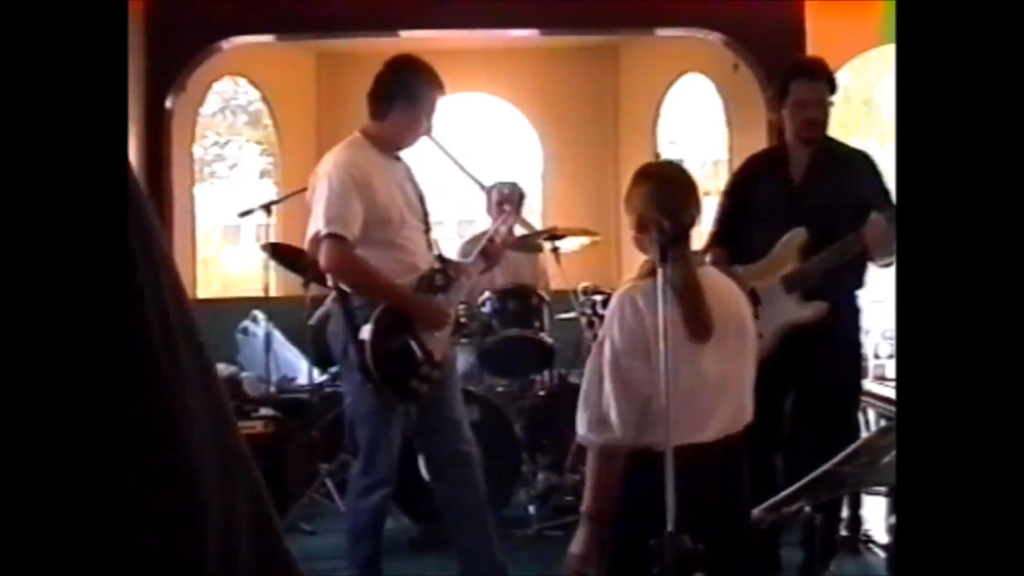
Brendon McAliece is a multi lingual expatriate Australian living in Thailand who speaks Thai, a number of its dialects and Lao. He has been playing guitar since he was 12 and continues to do so to this day.
He has performing in bands across the Middle East while contracting as a Aircraft Weapons Instructor with his 10 years of RAAF Armament Fitter experience and his maintained his love for playing guitar it continues to thrive today.
Also Visit:
DreamingGuitar.com – DreamingCoffee.com – LetsFlyVFR.com
As an Amazon affiliate I may earn on qualifying sales.
Leave a Reply